Project Notes
Year
2026
Services
Website Design
Web Development
Responsive Design
SEO
Copywriting
Stack
Overview
Angie Aly is a therapist whose work needed a website that felt personal, direct and reassuring without falling into the visual clichés that are common across therapy websites.
The site was designed around the way Angie actually communicates: clear, open and human. Rather than making the practice feel overly clinical, the design gives the content room to breathe while still having a strong visual identity of its own.
The result is a therapist website that explains specialist support clearly, makes potentially difficult subjects easier to explore and gives prospective clients an obvious route towards getting in touch.
The Challenge
Therapy websites have a difficult balance to strike.
They need to feel trustworthy and professional, but they are also often being visited by someone who may already feel anxious, uncertain or overwhelmed. Too much information can make the experience harder, while overly polished or generic wellness design can make a therapist feel distant.
For Angie, the website also needed to communicate specialist support around OCD without reducing the practice to a list of symptoms or clinical terminology.
The challenge was to create something with personality while keeping the experience calm, accessible and easy to understand.
It needed to answer the questions a prospective client is likely to have — what Angie works with, what therapy with her is like, whether they need a diagnosis, and how to take the next step — without making the website feel like a medical directory.
The Solution
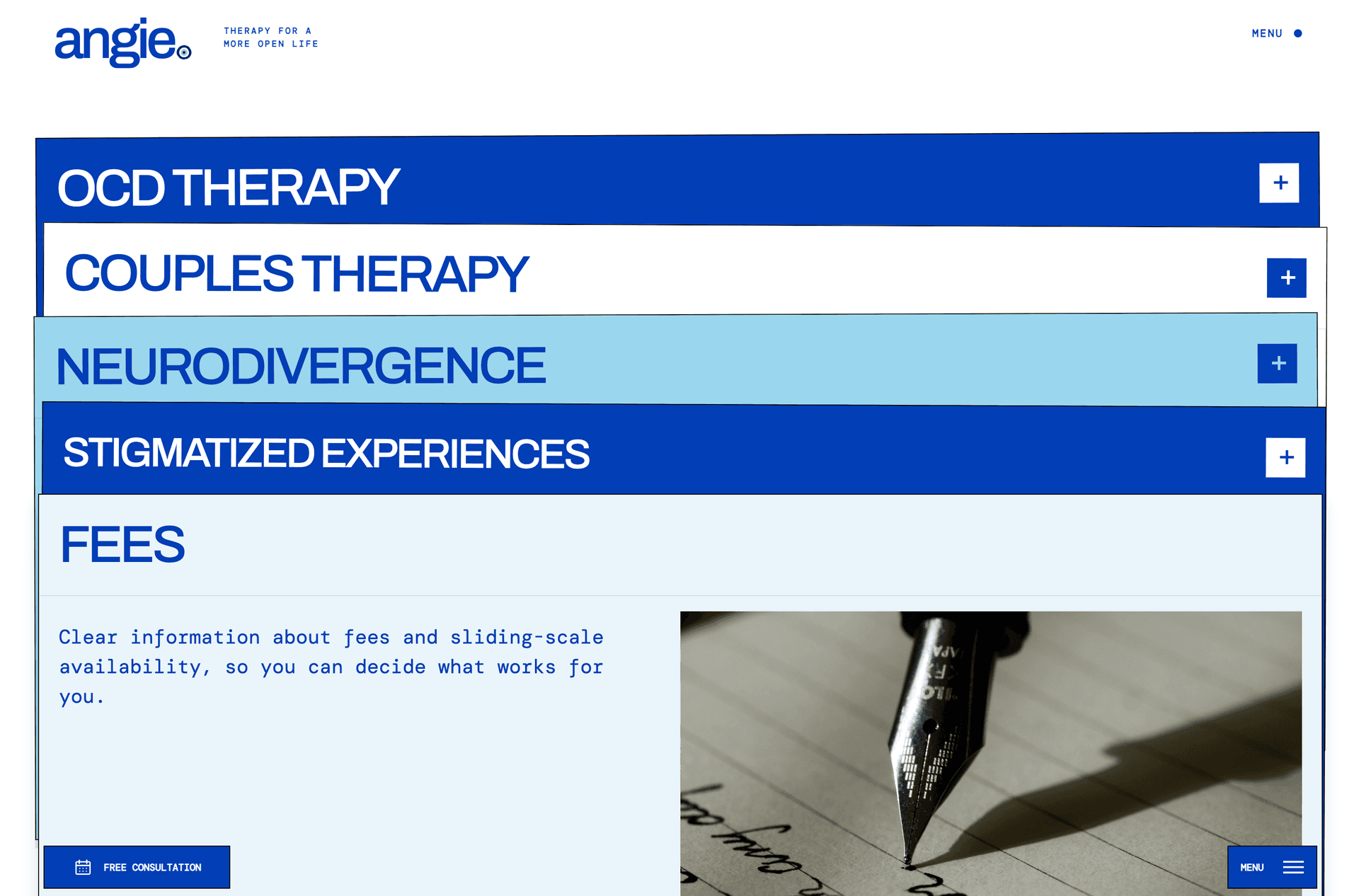
I created a custom website with a stronger editorial feel than a conventional therapy template.
Large typography, generous spacing and deliberately simple layouts give important statements room to land. The design uses visual character where it adds something, while avoiding unnecessary decoration around more sensitive content.
The copy and page structure were organised around the questions someone may actually be asking when considering therapy. Instead of expecting visitors to understand clinical language first, the site introduces OCD, intrusive thoughts and compulsive patterns in more approachable terms before guiding them towards further information or booking.
Frequently asked questions are integrated into the experience rather than hidden away, helping address uncertainty without overwhelming the main pages.
The website was also built responsively so the same sense of space and clarity carries through to mobile, where many prospective clients are likely to make their first visit.
The Result
The finished website gives Angie a digital presence that feels much more individual to her practice.
It is professional without feeling institutional, distinctive without becoming distracting, and structured so visitors can understand the type of support available before deciding whether they want to make contact.
For me, this project is a good example of why healthcare and therapist website design should not simply be about making something look calm.
Trust can also come from personality, clarity and making somebody feel that there is a real person on the other side of the screen.